
Welcome to the library
We are still growing, so watch this space as we cultivate our collection of information.

Andamooka township is located 640 kilometres by road north of Adelaide and approximately 110 kilometres north east from Woomera on the road to Roxby Downs and almost on the western shore of Lake Torrens in South Australia. The opal was discovered in “floaters” after an outback thunderstorm.


White Cliffs Opal field and township is located approximately 95 kilometres North North West of the township of Wilcannia in NSW. Wilcannia is located on the Darling River and Barrier Highway some 192 kilometres east of Broken Hill or 980 kilometres west of Sydney in Parish of Kirk, County of Yungnulgra.

The township of Lightning Ridge NSW, originally named Wallangulla, is located 750 kilometres North West of Sydney and just off the Castlereagh Highway in the Counties of Finch and Narran.

Opal is a mineral that belongs to a large group of minerals known as the “Silica family”. Silica, known by its chemical formula as “SiO2”, is a mineral compound of two atoms; Silicon and Oxygen. The most common forms of Silica in our environment are crystals of Quartz, or sand, and also window glass. Opal is unique however as it also has in its formula a component of water or ‘H2O’. The complete formula for opal is SiO2,nH2O. When we look at the letter ‘n’ in the formula it relates to “how much” water is in the Opal.

Numerous texts state that the derivation of the word “Opal” comes from the Sanskrit word “upala” although this appears to be the general name given for “precious stones” (Skertchley).
In Greek language, in the first century before Christ, the gemstone was known as “opallios”.

Opal is known worldwide as Australia’s National Gemstone and this is because Australian Opal fields produce commercially the highest quality, and most valuable precious Opal gemstones compared with any other source in the world. Without a doubt, the most striking thing about an Opal is it’s distinctive ‘play of colour’. It’s ability to diffract light results in rainbow like colours from every angle.

It has been published that the earliest references to opal are regarding a supposed discovery in Kenya Africa, by the renowned archaeologist Dr Louis Leakey in 1939. Dr Leakey reputedly discovered opal artefacts buried in the “Nakuru” cave which have been dated by modern scientific methods to an age of approximately 4000 BC. Since this time, it has been reported that this reported discovery of opal has been determined not to be opal.

The beginning of the Australian Opal story can be seen in the early expeditions of a man named Johannes Menge, a German mineralogist who reportedly explored for minerals in South Australia and discovered precious opal at Angaston in the Barossa valley in 1841. After this initial discovery of opal, the centre of attention for exploration moved to Queensland where opal was discovered at Listowel Downs Station in central outback Queensland in 1869. Tully Cornwaith Wollaston who travelled to the central Queensland fields in the summer of 1889 became the father of the Australian opal industry. He succeeded in trading and marketing Australian boulder opals in London in 1890, and White Cliffs opal the same year. He also marketed Lightning Ridge opal and opal from the South Australian field of Coober Pedy in 1915.
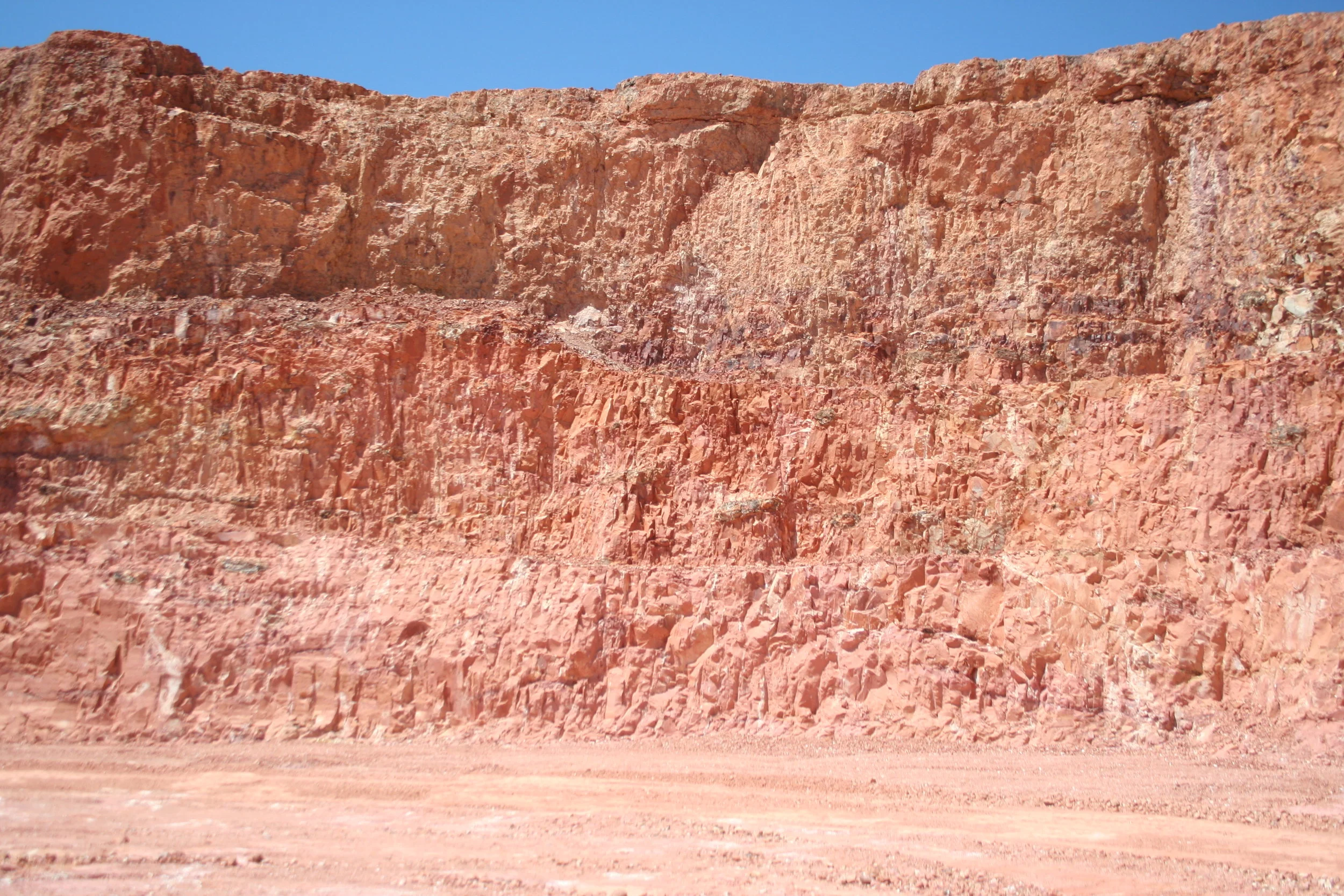
Common varieties of Opal are found all over the world and in many different localities and environments, perhaps this is why it is called common Opal. Precious opal is found in fewer locations worldwide. However the most important source of precious Opal is in Australia.

The Queensland boulder opal fields occupy the largest or most geographically disperse opal occurrences throughout Western Queensland. The area goes from the Yowah opal district near to the NSW border and 70 kilometres west of Cunnamulla (some 1250 kilometres west of Brisbane), to as far north as Winton in Central Western Queensland, 180 kilometres north west of Longreach or 900 kilometres west of Rockhampton. As mentioned earlier, the first discovery of opal occurred at Listowel Downs on Blackall Station in 1869. In 1870 opal was discovered 100km to the east in “Barcoo” country not far west from Charleville, by Rev WB Clark, reported to the Royal Society of NSW in 1872 and displayed in an exhibition in the Vienna Museum of Natural History. In 1879 Herbert William Bond successfully floated an opal mining Company in London based on the ownership or leasing arrangements of several of the central Queensland opal mines.

Mintabie township is located 40 kilometres by road west of Marla on the Stuart Highway, some 160 kilometres south of the South Australian border with the Northern Territory. It is 270 kilometres north of Coober Pedy or 1100 kilometres north of Adelaide.
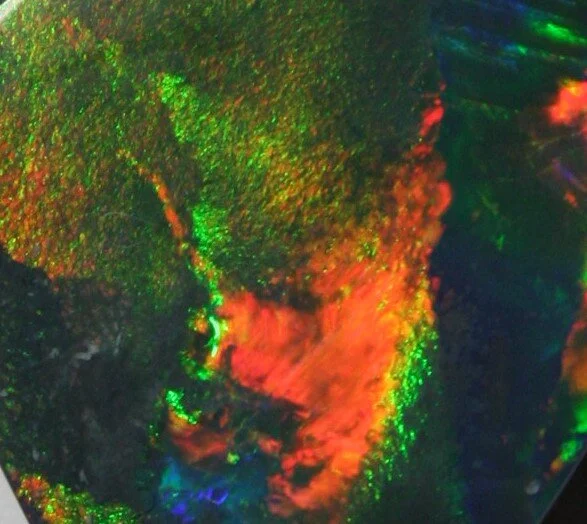
In more recent times and in conjunction with the discovery of some new precious opal occurrences as well as other discoveries of non-precious or ornamental opal varieties many in the opal industry in particular and the jewellery industry as a whole have begun to suggest that the Opal Nomenclature as published by the GAA in the Australian Gemmologist in 1997.

In the discipline of Gemmology (which is a subdivision of mineralogy as a classification. The terminology or classification of opal is different. Principally Gemmology discusses the use of minerals as gemstones which may be fashioned (cut and polished ) for use in the jewellery industry. Typically the classifications or terms important to gemmology are, Natural, Synthetic, Imitation, Composite or Treatment .

The classification of opal has always presented difficulties and many different names have been given to opals. Broadly speaking opal types have often been named by:-

Natural Opal (Type 1) or Type 1A, Natural Hydrophane opal (Type 1B) or Type 4, Natural Boulder opal (Type 2), Natural Matrix opal (Type 3)

There are two ways of describing opal types by way of its geological formation. The first method has always been to describe opal by the name of the rock type that the opal is associated with. By this method we distinguish two and potentially three types of opal. They are “Volcanic opals”, and “Sedimentary opals” and are typically used in different types of literature. The third type of opal then is “Metamorphic opal”. This classification of opal can be misleading when it is used to discuss opal, as it is impossible for opal to survive in the volcanic geological environment.

The original types of opal for the mineralogical classification that are found in most textbooks contain a combination of some of the terms already discussed above as well as some terms descriptive of the phenomena seen in different opals such as sheen (girasol opal) or inclusion (moss opal). However with the discovery of the structure of opals in 1965 at the CSIRO, Segnit et al proposed a new mineralogical nomenclature in which types of opal are based on the opal structure as revealed by X-Ray diffraction techniques.
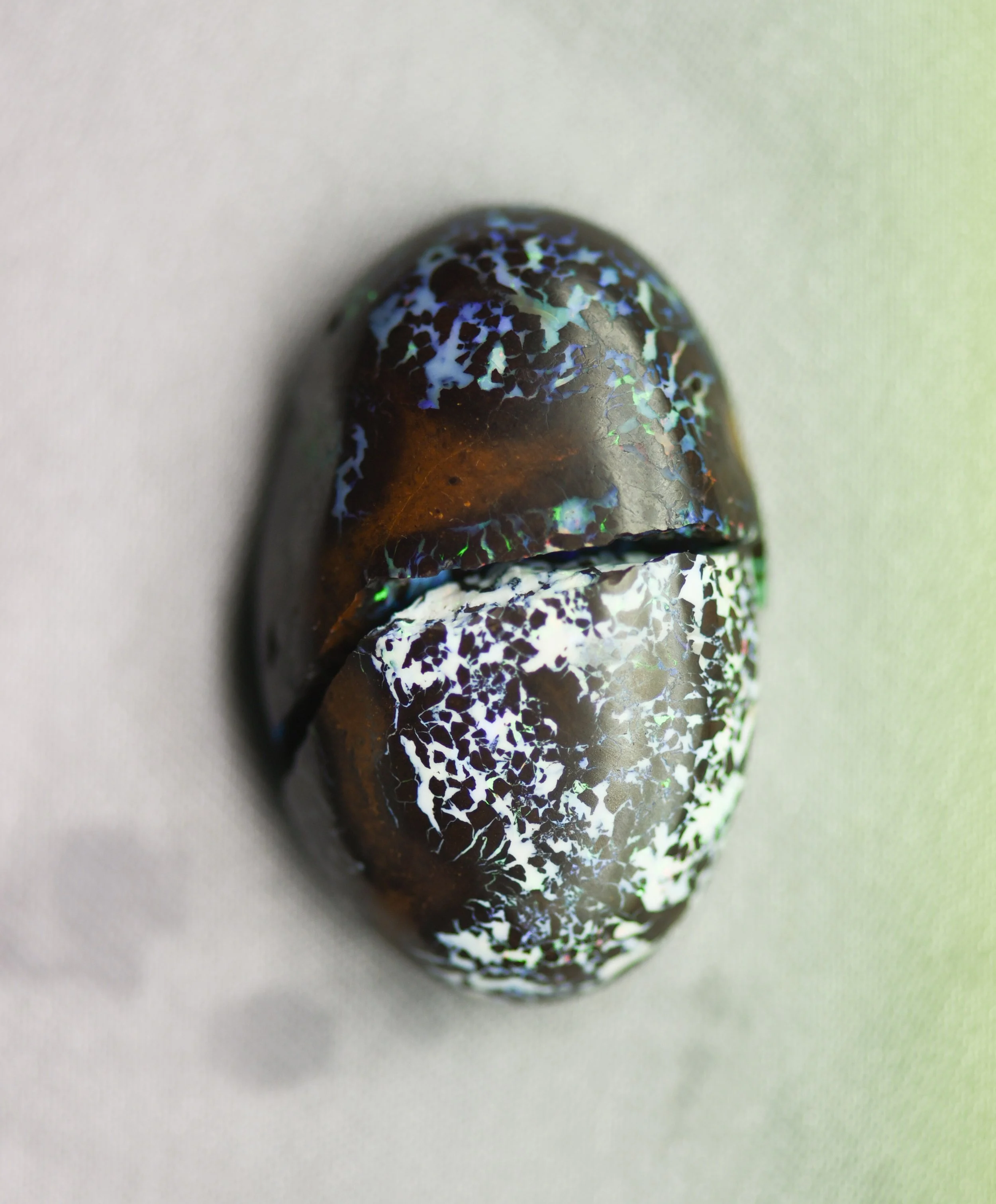
Opal Academy examines an interesting specimen of ironstone boulder matrix opal with characteristics of hydrophane..


Precious black opal is an exquisite gemstone, opal is often referred to as “the Queen of Gems”

Precious hydrophane opal is a variety of precious opal (opal that shows a play-of-colour) that is absorbent. Typically it absorbs water, however the porosity of the material also is indicative of the material being susceptible to absorbing other colouring agents. As such it poses a difficulty for gemmologists in identification procedures.

Boulder opal is in most instances the name given to opal that occurs in ironstone concretions of varying sizes. When cut and polished with “the rock” is incorporated in the gemstone. In a nomenclature discussion this is determined to be defined as “Opal and rock”. This is the description given in the opal nomenclature which we continue to refer to in other blogs, and descriptions on the Opal Academy website.

Matrix opal has been defined as “opal presented in one piece where the opal is intimately diffused as infillings of pores or holes between grains of the host rock in which it is formed”.
In the original nomenclature published in the Australian Gemmologist Volume 19, Number 12, 1997 which you can read in the literature section of the website, or you can check out the Nomenclature page here………

Earlier this year and due in part to not being able to meet as everyone will say “covid19” I was approached by the Scottish Gemmological Association to give a presentation via “Zoom’ to the members for their usual annual conference. This was something significant and I was really privileged to do. The presentation , albeit with one or two “quirks” is available here for anyone to view. The presentation runs for about 40 minutes.

The study of opal gemmology follows the normal procedures of non-destructive gemmological testing. These procedures examine the observable qualities of gemstones which include the physical or mineralogical properties of opal and more particularly measurable observations of refractive index (RI), Specific Gravity (SG), examination under exposure of excitation Ultraviolet light, and Microscopic examinations of opal characteristics such as imperfections and inclusions. Advanced material science methods of examinations for gemmological purposes is also beginning to become a necessity for the modern gemologist

By Gemmological definition, a natural opal is an opal that has been mined or found and comes out of the ground, from a natural environment. At present there are two geological variations of Natural Opals. (See discussion of Geological Occurrences). We have natural opals that occur in or are associated with rocks that are of a sedimentary origin, and natural opals that occur or are associated with rocks of a volcanic origin. This distinction is difficult and eventually Scientific investigations will become much more definitive. However for now these two ‘environments’ provide us with a suitable distinction.

The first attempt at manufacturing synthetic opal was made soon after the determination of the structure of opal in 1964 Sanders. Details of the procedure used to first synthesise opal are preserved in the original patent documents registered by the CSIRO in Australia, Great Britain and the USA during 1964. The original patents for the synthesis procedure were finally accepted some seven years later, on October 11th 1971.
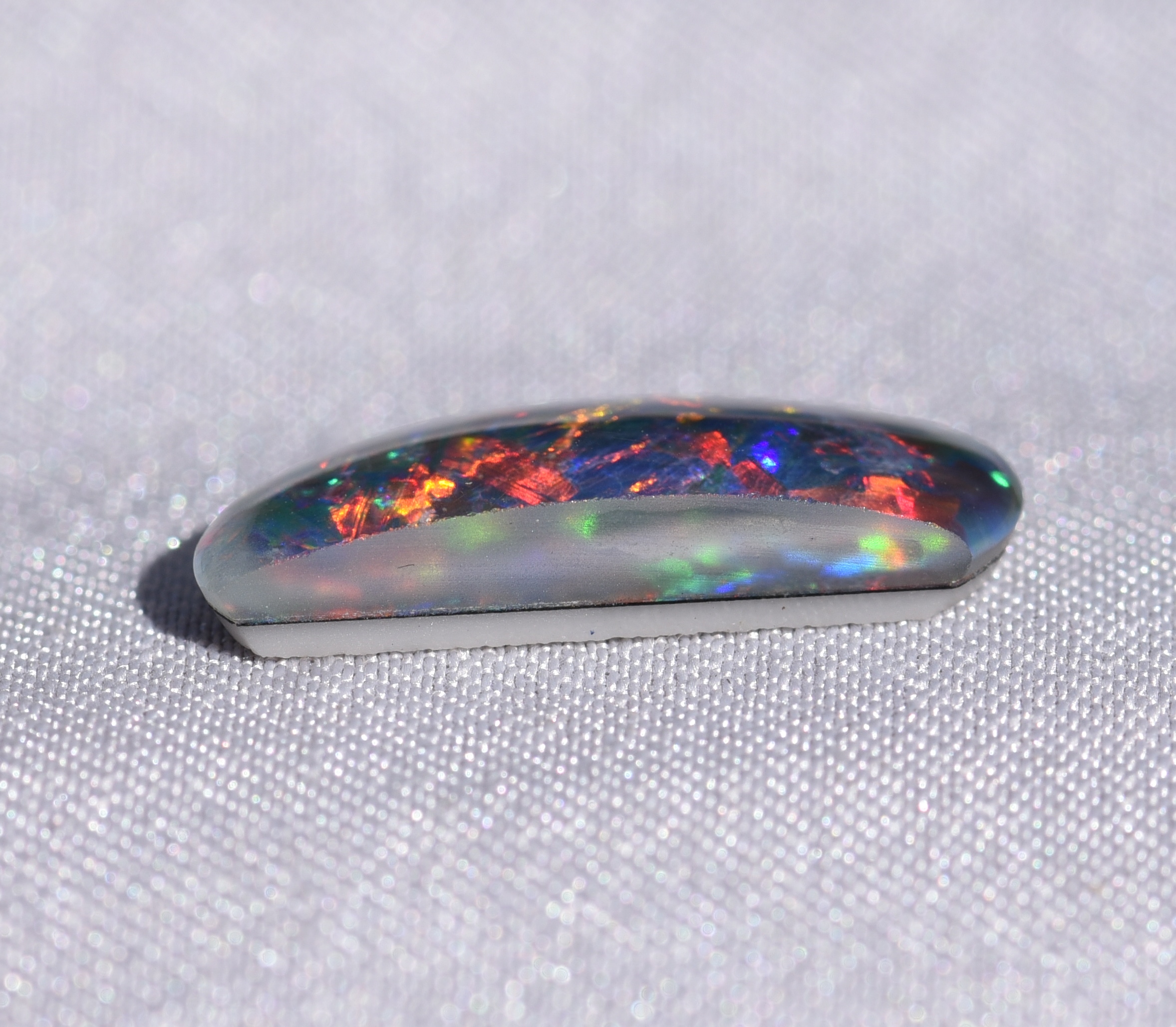
Triplet opals then are an artificial opal that is constructed from three pieces, in someways a triplet opal is just a doublet opal that has had another piece of material adhered to the top. So to create a Triplet opal all you need to do is adhere a clear or transparent material to over the top of the “opal” layer! As with the black material used as the base of a doublet opal, the clear layer over the top can be any material that is clear and transparent. Again it may be glass, plastic or anything else.
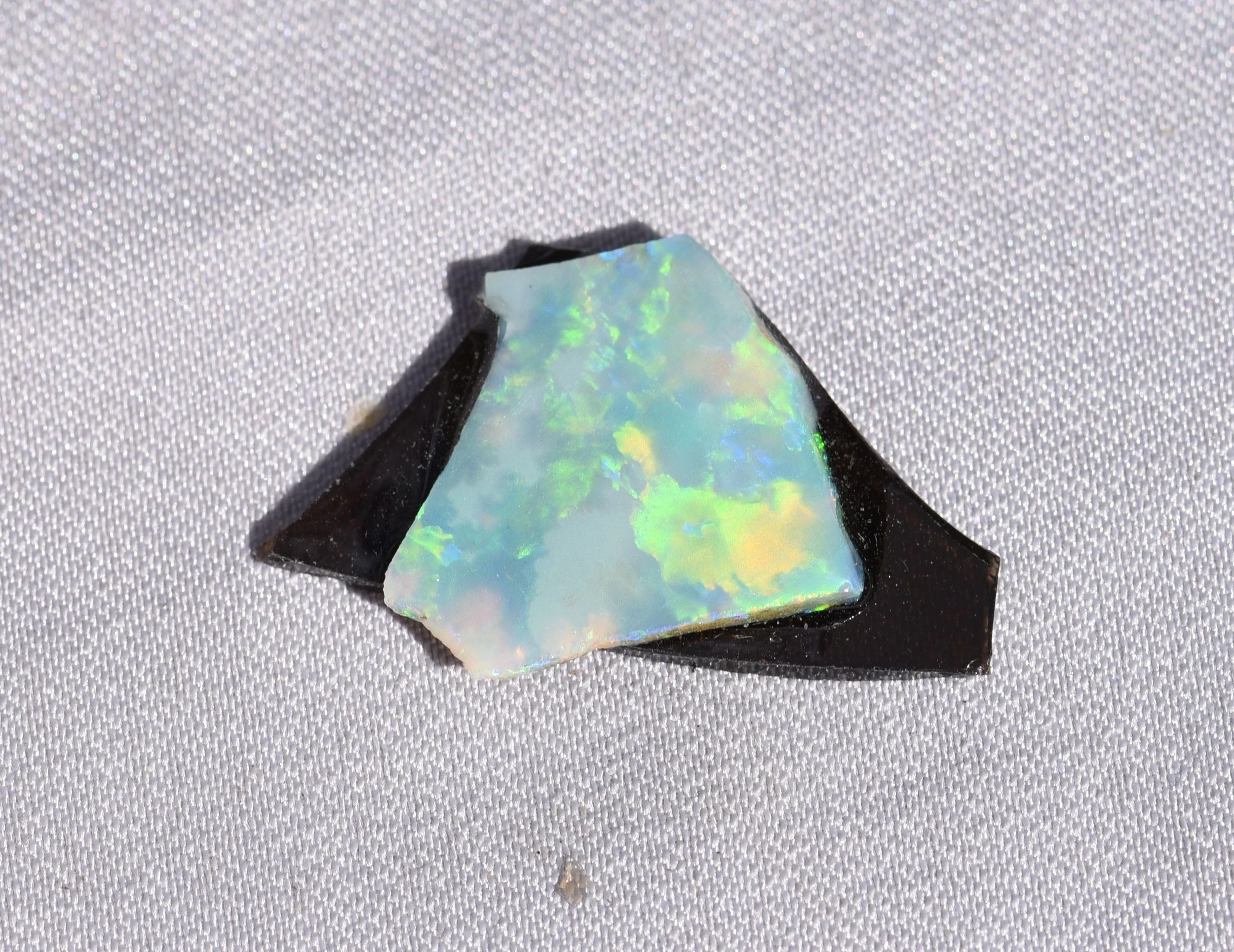
Doublet opals come in two basic forms, a doublet of two pieces to imitate a black opal, or a doublet of two pieces to imitate a boulder opal. In the case of a doublet imitating “Black opal” the doublet usually consists of a thin laminate of “opal” glued or adhered to a black substrate of some material (the substrate can be be anything that is black, a few examples may be black potch opal, or black glass, or something painted black), anything black will do!


Soon after the ordered, sphere-based structure of opal was revealed by CSIRO scientists, innovative potential synthesisers of this material started to postulate the various methods by which synthetic opals could be manufactured. All that was needed were suitably sized spherical particles of a suitable transparent medium. In fact, any transparent material capable of being flocculated and deposited into a three-dimensional ordered spherical array would be suitable for producing imitation opal; provided the spheres produced were of suitable size and optical transparency, and that they were arrayed in the appropriate Bragg relationship.


Chip opals are a little different in their construction, usually the opal component (again either natural opal or imitation opal) is encapsulated into a some form of envelope. The opal chips are mixed together, usually with a resin based material and then contained in some sort of capsule. The chips can be tightly packed, or just loosely packed depending on the type and effect to be obtained.
Chip opals are found to imitate all three of the natural opal varieties, light opal, Black opal and boulder opal.

Don Completed his Doctorate at the Colorado school of mines, and spent many years employed with the USGS. Whilst I am not sure of the exact time I came in contact with Don, we shared a mutual enthusiasm for gemology, geology and specifically precious opal.

Boris Chauviré is an international opal researcher operating from his home country in France. Boris has spent much time as a field gemmologist in Ethiopia, documenting the occurrence, and geology of this more recent precious opal occurrence Boris’s research is an invaluable contribution to opal science.

Scientist Neville Curtis, primarily researching the silica polymorphs Opal-AG, Opal-AN and Opal-CT

This mineralogical text provides the most up to date description of opal and opaline silica for its time, published in 1962, only a few years before Australian scientists discoveries of the structure of precious opal.

Recently there was some discussion on the Australian National council of Jewellery valuers about opal on Mars. We have prepared this post with the knowledge we presently have available. Comments welcome

On the 22 of October 2021 an online discussion was aired in the interests of furthering our knowledge about precious opal, opal formation and opal fossils. Hosted by the Australian Opal Centre (AOC) and with contributions from most of the important opal commentators available at the time.

Paul Thomas is a senior lecturer in the school of mathematical and physical sciences at the University of Technology in Sydney (UTS). Paul has a special interest in the characterisation of silica in the form of Precious Opal. Paul has presented lectures regarding the structure and morphology of opal at a number of the Australian opal symposiums.

Bruce is a physical chemist by training with a long history in measurements of natural radioactivity and computer-assisted data processing. He turned down a job with NZ DSIR in 1973 to work on problem of silica in geothermal waters but in 1978, was part of a team looking at the thermoluminescence of natural opal and Gilson opal as a means of distinguishing the two. he conclusion (to borrow from Winston Churchill) was that “Opal is a riddle, wrapped in a mystery inside an enigma”.

To discuss opal formation we need to look at a few fundamental criteria that are needed to produce precious opal. These fundamental things are we need to find silica, and where it comes from, we need water, and to know where the water comes from, we need to know how the silica and water we now have, and understand the chemistry and the interaction of these components, and we need to know how and where the opal is deposited in the environment. Hopefully we provide an introduction to these processes.

Andamooka township is located 640 kilometres by road north of Adelaide and approximately 110 kilometres north east from Woomera on the road to Roxby Downs and almost on the western shore of Lake Torrens in South Australia. The opal was discovered in “floaters” after an outback thunderstorm.

The township of Coober Pedy is situated on the edge of the Stuart Range in South Australia, 838 kilometres by road north of Adelaide. Presented here is a short discussion about one of Australias largest opal producing fields.

White Cliffs Opal field and township is located approximately 95 kilometres North North West of the township of Wilcannia in NSW. Wilcannia is located on the Darling River and Barrier Highway some 192 kilometres east of Broken Hill or 980 kilometres west of Sydney in Parish of Kirk, County of Yungnulgra.
The township of Lightning Ridge NSW, originally named Wallangulla, is located 750 kilometres North West of Sydney and just off the Castlereagh Highway in the Counties of Finch and Narran.

Precious or noble opal opal is found in the north-eastern state of Piaui in Brazil. The mining area around Pedro Segundo and the mining districts of Pedro 11 and Buriti dos Montes are well known for opal

The Indonesian word Kalimaya pronounced “Ka-li-may-yah” and is translated as Kali (river) maya illusions or “Rivers of illusion” relating to the flowing and movement of colours as the gemstone is turned and moved.

A little introduction to this occurrence of precious opal is needed. Precious opal from this occurrence in Europe is most likely the oldest known source for the production of the gem. Different records in literature can often detail geographically different names of localities with different emphasis. An attempt will be made to elucidate these differences so that it will become apparent that the records are of the same opal fields in each case. It is also interesting to note that various places named which are associated with European opal have ben “anglicised, or if I may “Americalified”. Peter Semrád allays all of these issues in his book: “The story of European Precious opal from Dubnik” 2011. ISBN: 978-80-7296-079-8.

Honduras has long been recognised as a source of precious opal, however not until recently has there been sufficient activity to supply even a small amount to the opal trade - Tony Dabdoub - “The fire still burns.’

Tintenbar is the geographical name given to an area in north eastern NSW that encompasses a number of opal discoveries and opal fields within the surrounding areas. Tintenbar is essentially the only area that has produced commercial quantities of precious opal from a so called “volcanic geological environment”.
The Queensland boulder opal fields occupy the largest or most geographically disperse opal occurrences throughout Western Queensland. The area goes from the Yowah opal district near to the NSW border and 70 kilometres west of Cunnamulla (some 1250 kilometres west of Brisbane), to as far north as Winton in Central Western Queensland, 180 kilometres north west of Longreach or 900 kilometres west of Rockhampton. As mentioned earlier, the first discovery of opal occurred at Listowel Downs on Blackall Station in 1869. In 1870 opal was discovered 100km to the east in “Barcoo” country not far west from Charleville, by Rev WB Clark, reported to the Royal Society of NSW in 1872 and displayed in an exhibition in the Vienna Museum of Natural History. In 1879 Herbert William Bond successfully floated an opal mining Company in London based on the ownership or leasing arrangements of several of the central Queensland opal mines.
Mintabie township is located 40 kilometres by road west of Marla on the Stuart Highway, some 160 kilometres south of the South Australian border with the Northern Territory. It is 270 kilometres north of Coober Pedy or 1100 kilometres north of Adelaide.


The appreciation of a cut gemstone piece of precious opal requires discussion of the attributes of the Play-of-colour seen in the face of the opal. These attributes are separate from the normally discussed 4c’s of gemstone grading.


The item is owned by a colleague Suzanne White and while there are perhaps records of major named precious Australian opals recorded in history, more modern, or more recent items seem not to have been well highlighted.
LITERATURE


A journal article from Gems and Gemmology on the occurrence of Precious opal in Ethiopia


In this Article, Neville Curtis and his colleagues discuss new information regarding the mineralogical varieties of opal


The article in this issue of the Australian Gemmologist was for its time a ”land breaking” discussion on opal nomenclature.

The article in this issue of the Australian Gemmologist was for its time a ”land breaking” discussion on opal nomenclature.

LAurie Aldridge began his scientific career working on the structure of zeolites using X-Ray diffraction (XRD) at the university of Otago in New Zealand.In 1990 Laurie moved to Australia to work at ANSTO specializing in cement chemistry and the structure of minerals and clays. More recently Laurie has joined with my self (Anthony Smallwood) and Paul Thomas (UTS) to study precious opal structure.