An interesting specimen of boulder Ironstone matrix opal
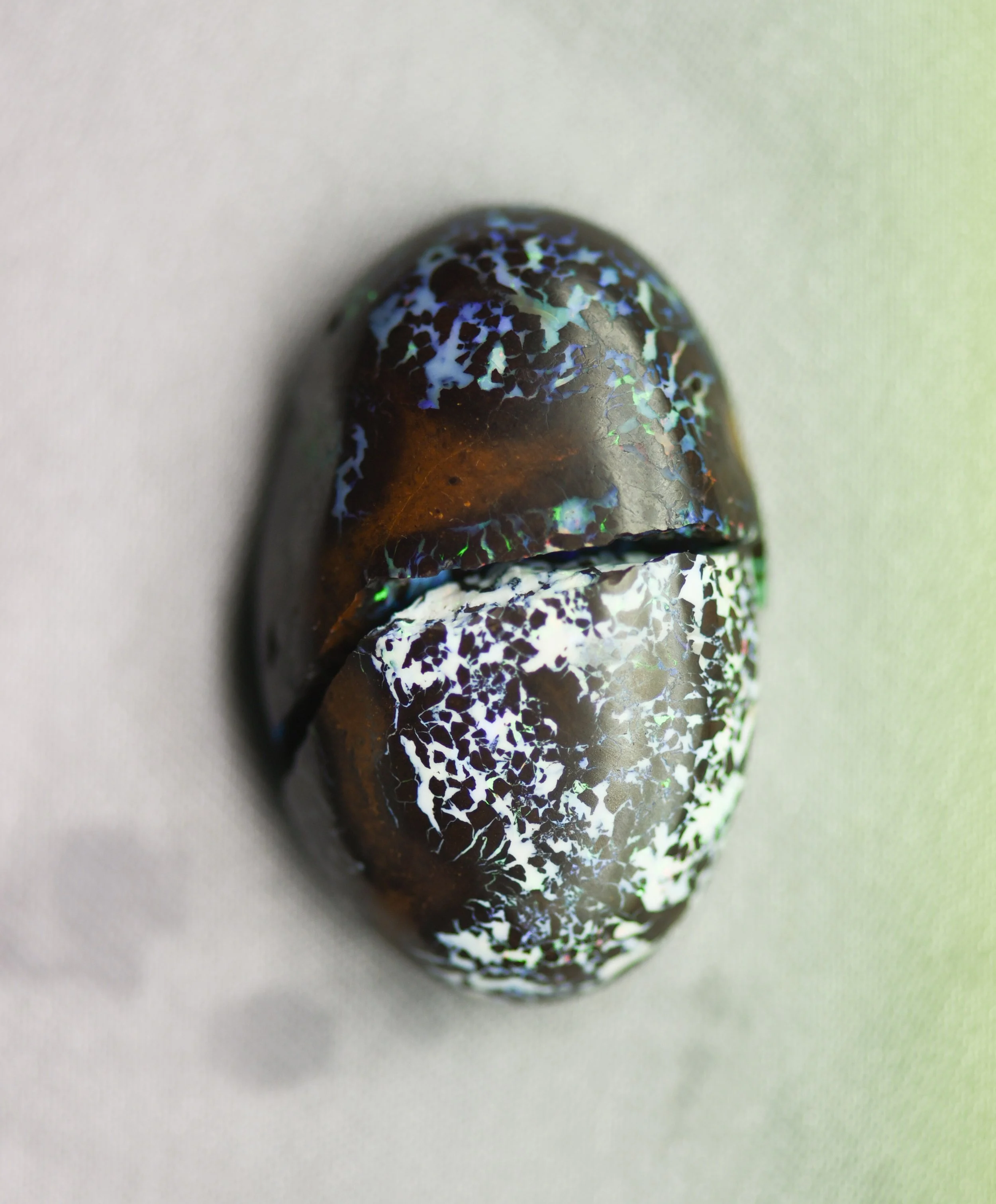
A recent specimen of boulder ironstone matrix opal which has come across the research table of the opal academy. The field of origin knowledge of the specimen is unknown at this time. The specimen is a part of a collection of opal specimens from from our colleague Peter Sherman, and was given to the academy because of its gemmological interest. This opal component of this gemstones shows characteristics of hydrophane opal.
hydrophane type ironstone boulder matrix opal.
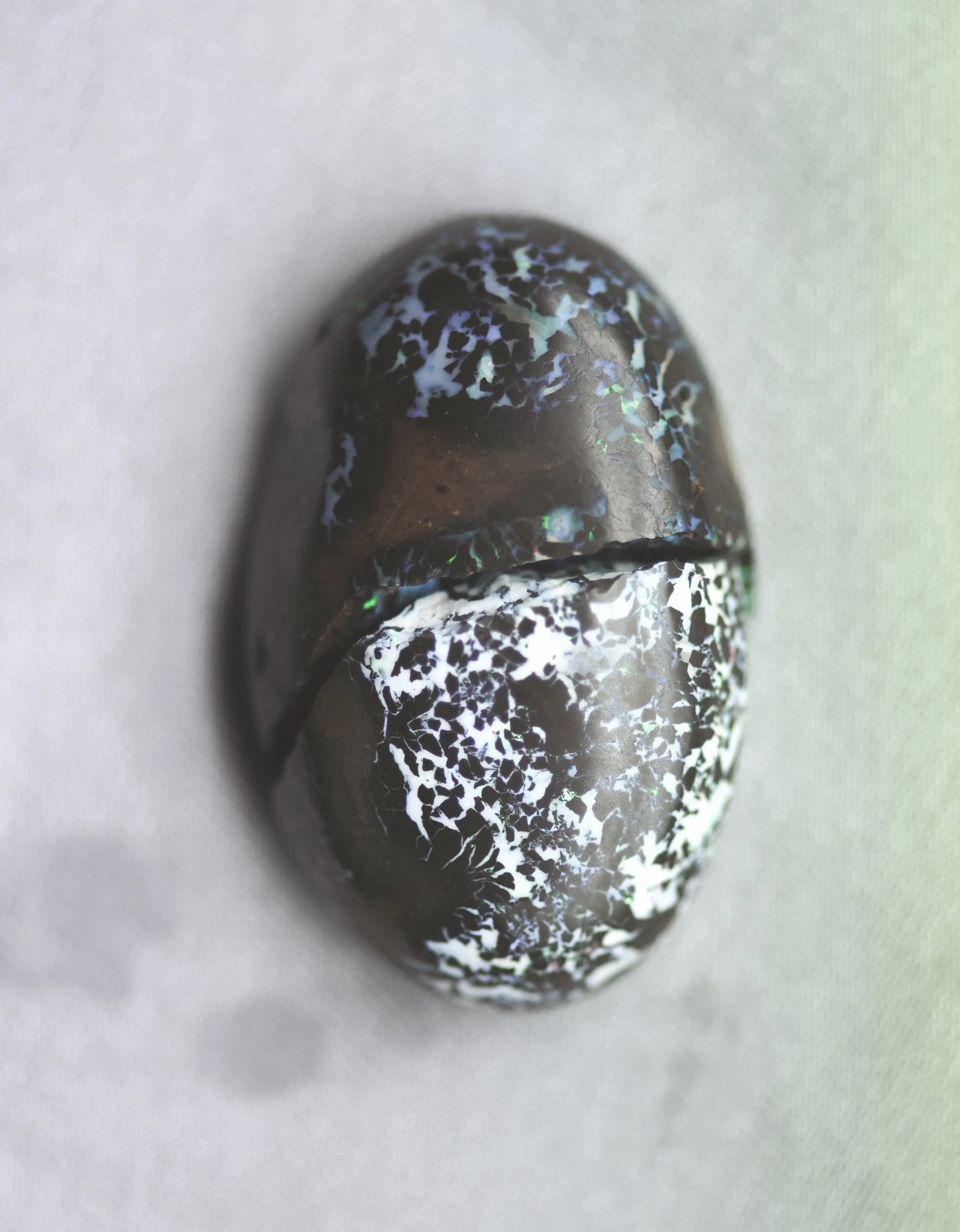
A broken oval cabachon of hydrophane type boulder ironstone matrix opal. The top section of the cabochon has been immersed in water and the bottom section of the stone shows the normal state.
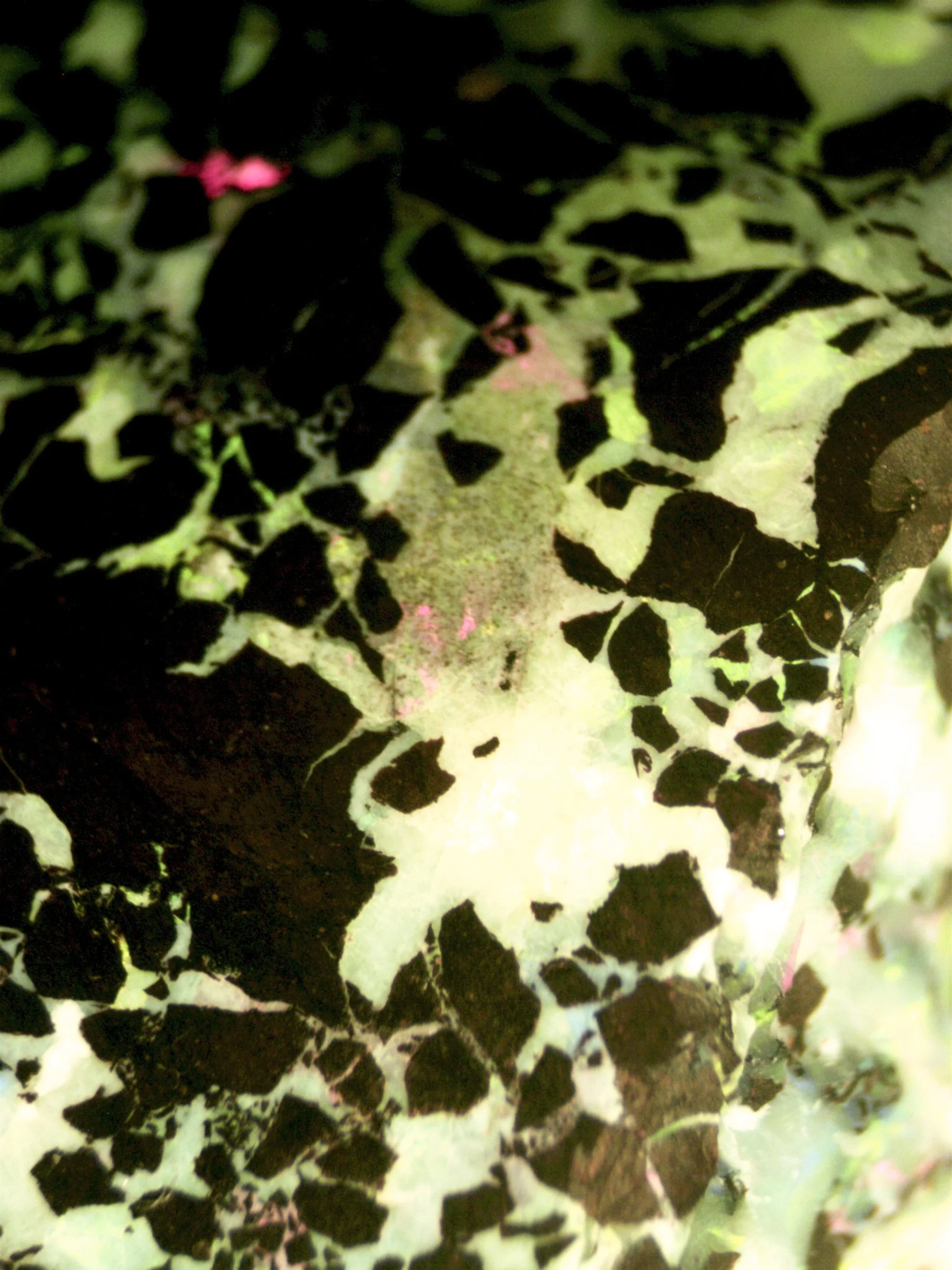
A photomicrograph of a portion of the ironstone boulder matrix hydrophane opal partially showing the difference between where the opal absorbed water (darker portion at top), and the dry white portion below.
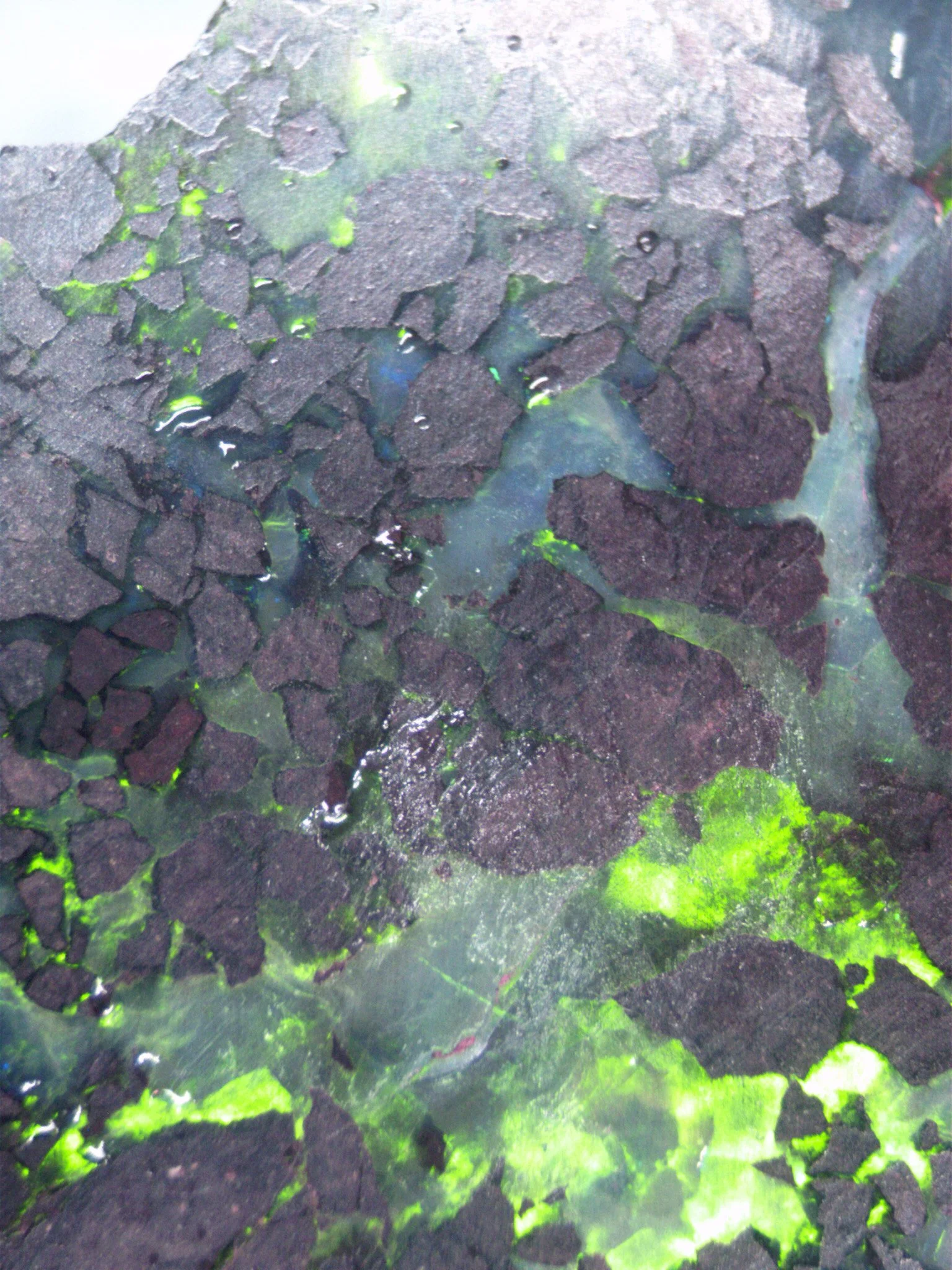
After more complete immersion
The ironstone matrix of this opal is typical of boulder ironstone matrix opal from Queensland opal fields, however the precise field location is unknown. Previously we had heard of a similar possible occurrence of boulder matrix that may have been hydrophane type opal, scant details were given in a discussion at an opal symposium in Winton, Queensland. At the time and after a request we received some similar material for examination from Cody Opals in Melbourne, however on examination it was difficult to determine the true nature of the Cody samples. This sample in the pictures above however was significantly more absorbent and worthy of sharing with the gemmological community.
opal which may separate from its ironsone host
In some instances after cutting and polishing, the opal component of the boulder opal can separate from the ironstone. There may be a sandy or silt layer found between the opal and the ironstone rock which interferes with the adhesion between the two components. A test of this can be used by immersion in water (or another liquid). This is illustrated in the photographs below. The water will “whet” the surface of both the opal and the ironstone, and hence make the opal layer more visible. It is this scenario that makes it difficult to determine if the specimen is hydrophane, or if it is just the water being included between the opal and the ironstone.
The two pictures to the right show a subtle defect that may occur in a very small amount of boulder opal where the opal layer that is attached to the ironstone may partially separate. The photo on the left is a photo that shows this separation. The photo on the right is a photo of the same opal that has been immersed in water, note that the water has “whetted” the contact between the opal and the ironstone. Note that the specimen is not an indication of the opal being hydrophane.
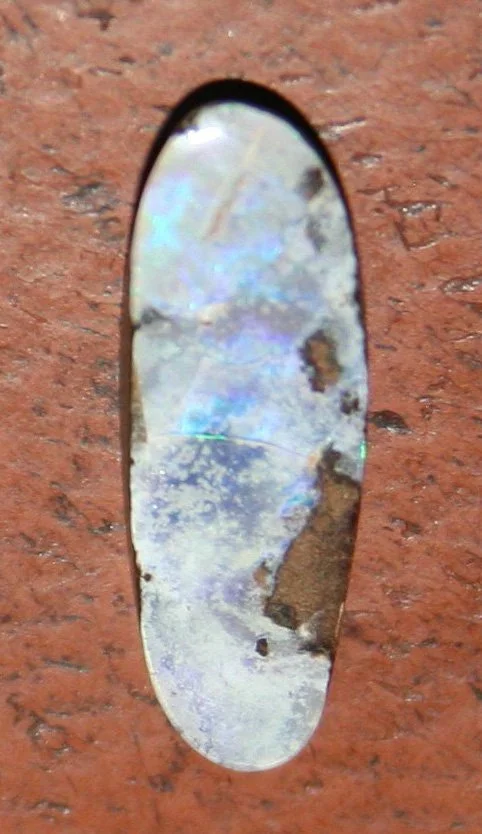
A specimen of boulder opal where the opal is separating from the ironstone
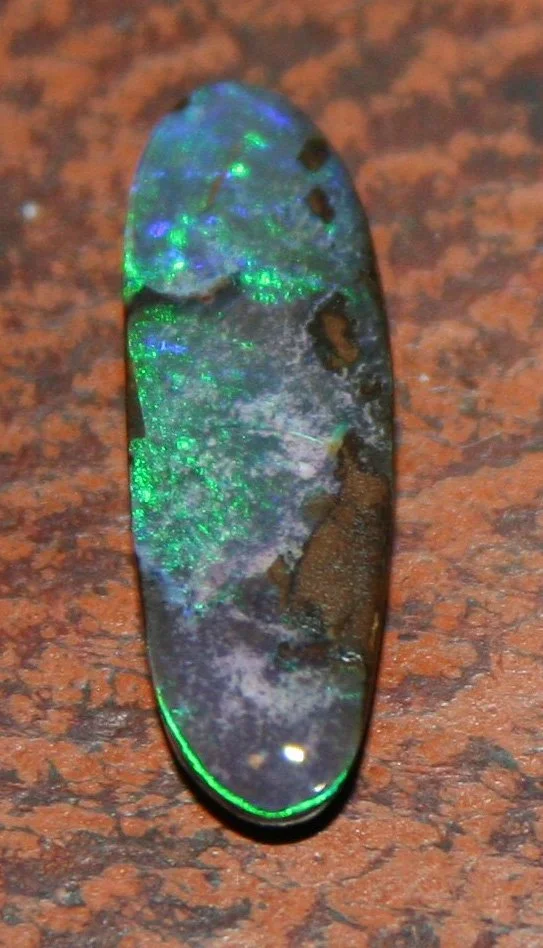
The same specimen which has been “whetted” after immersion in water.
a gemmological point of interest
the indication that the opal layer may be separating from the ironstone leads us to look at the possibility of a treatment for this variety of ironstone boulder opal. it is possible and has been noted in gemmological treatment literature that it is possible to fill the join between the opal and the ironstone with a suitable resin that will permanantly seal the opal back onto the ironstone base. This becomes a difficult treatment to both analyse and detect. We will discuss this more in our posts on opal treatments.